Legal Instruments
|
Regional Legal Instruments With a view of strengthening governance in the Region. ROPME has developed protocols addressing the critical areas of environmental management. The Kuwait Regional Convention for Co-operation on the Protection of the Marine Environment from Pollution (1978) has related protocols that were developed in accordance with the recommendations of the Legal Component of the Kuwait Action Plan. These protocols include: |
|
|
Kuwait Regional Convention for Cooperation on the Protection of the Marine Environment from Pollution |
|
The Convention is the basic legal instrument binding the eight States of the Region to coordinate their activities towards protection of their common marine environment. The Convention consists of thirty Articles broadly dealing with responsibilities of the Contracting States for the protection and preservation of the marine environment which is under constant threat of pollution from offshore and land-based activities as well as marine transport. The Convention was adopted with the objective to ensure that development projects and other human activities do not in any way cause damage to the marine environment, jeopardize its living resources or create hazards to human health. Another objective of the Convention was the development of an integrated management approach to the use of the marine environment and the coastal areas in a sustainable way which will allow the achievement of environmental and developmental goals in a harmonious manner. To this effect, the importance of cooperation and coordination of action on a regional basis with the aim of protecting the marine environment and the coastal areas for the benefit of present and future generations, is emphasized throughout the Convention. The Convention which was signed on 24 April 1978, entered into force on l July 1979 and enjoys the participation of eight Parties. No Signatories without ratification, acceptance, approval or accession. |
|
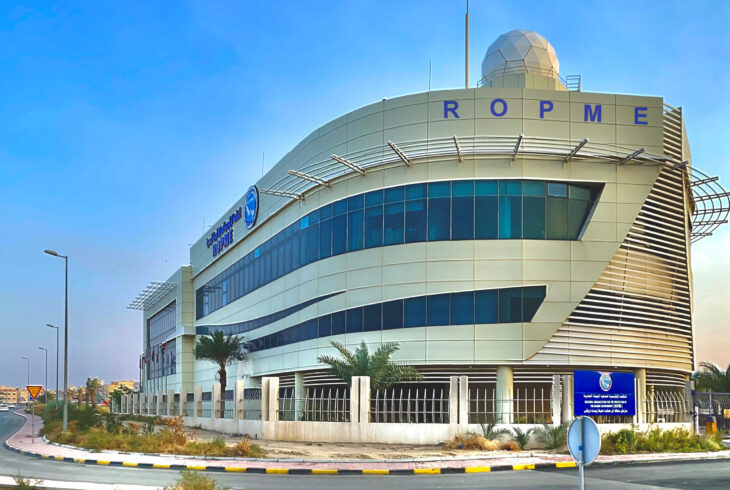
The Regional Organization for the Protection of the Marine Environment (ROPME), as defined in Article XVI of the Convention, was established on 1 July 1979 to implement the Kuwait Action Plan, as well as the Kuwait Regional Convention and its Protocols. Subsequently, based on the arrangements adopted at the Conference of Plenipotentiaries, a UNEP Interim Secretariat administered the programmes and activities of the Organization until the establishment of the ROPME Secretariat in Kuwait on 1 January 1982. |
|
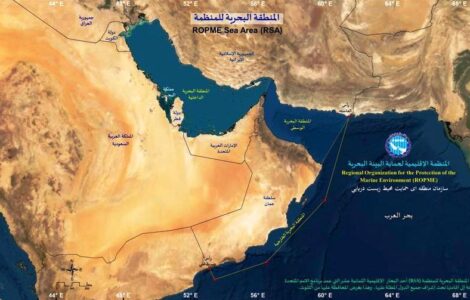
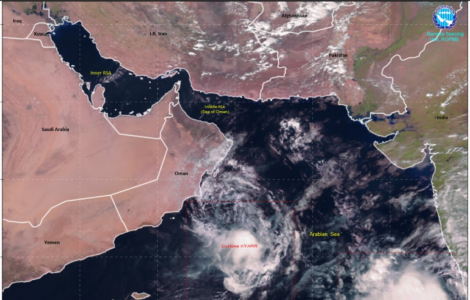
The Convention shall apply to the sea area in the Region bounded in the south by the following thumb lines: from Ras Dharbat Ali in (160 39 / N, 530 3 / 30//E) then to a position in (160 00/ N, 530 25/E) then to a position in (170 00/ N, 560 30/E) then to a position in (200 30/ N, 600 00/E) then to Ras Al Fasteh (250 04 / N, 610 25 / E), referred to as the “Sea Area”. The Sea Area shall not include internal waters of the Contracting States unless it is otherwise stated in the Convention or in any of its Protocols. That part of the Sea Area located north-west of the rhumb-line between Ras Al Hadd (22030 / N, 59048 / E) and Ras Al Fasteh (25004 / N, 61025 / E) is designated by MARPOL 73/78 as a “Special Area”. |
|
ROPME PROTOCOLS |
|
ROPME Protocols have been developed in accordance with the recommendations of the Legal Component of the KAP. These Protocols have made the mandate of the Kuwait Regional Convention more specific and have had an important role in harmonizing the policies of Contracting States concerning protection of the environment under the national jurisdiction of each State and that of the Region. Meetings of regional/international experts are convened regularly to examine the status of implementation of various programmes in order to ensure that the provisions of the Protocols are complied with. |
|
The objective of the Protocol, which was signed on 24 April 1978 and entered into force on 1 July 1979, is to provide cooperative and effective preventive and response measures to deal with marine emergencies caused by oil and other harmful substances. Marine emergency means any casualty, incident, occurrence or situation, however caused, resulting in substantial pollution or imminent threat of substantial pollution to the marine environment by oil or other harmful substances and includes, inter alia, collisions, strandings and other incidents involving ships, including tankers, blow-outs arising from petroleum drilling and production activities, and the presence of oil or other harmful substances arising from the failure of industrial installations. The Protocol with 13 Articles and an Appendix on guidelines for reporting marine emergencies has the same status of participation as the Convention. |
|
The objective of the Protocol is to coordinate regional activities towards protection of the marine environment against pollution from exploration and exploitation of oil and gas in the continental shelf. The Protocol with fifteen articles and four Guidelines is a broad framework for developing comprehensive action plans delineating the obligations of Contracting States at the national and regional levels for sound environmental practices in offshore exploration and production (E & P) activities. The Protocol has the same status of participation as the Convention. |
|
The Kuwait Regional Convention at Article VII stipulates that the Contracting States shall take all appropriate measures to prevent, abate and combat pollution in the Sea Area resulting from exploration and exploitation of the bed of the territorial sea and its sub-soil and the continental shelf. To this effect, the Protocol was concluded, signed on 29 March 1989, and entered into force on 17 February 1990. Later, the following Guidelines to the Protocol were adopted by the Seventh Meeting of ROPME Council on 21 February 1990: |
|
|
These Guidelines are to assist Contracting States in developing their specific plans and measures in compliance with the provisions of the Protocol. Also, the application of common standards, criteria and regulations, as well as the harmonization of environmental policies, programmes, administration and legislation of Contracting States for the fulfillment of their obligations under the Protocol, are major objectives to be achieved in the near future. |
|
The Kuwait Regional Convention at Article VI stipulates that the Contracting States shall take all appropriate measures to prevent, abate and combat pollution by discharges from land reaching the Sea Area whether water-borne, air-borne, or directly from the coast including outfalls and pipelines. Also, the development and adoption of a protocol on pollution resulting from land-based sources has been recommended under the Legal Component of KAP. To this effect, the Protocol with 16 Articles and 3 Annexes was finalized in 1989, signed on 21 February 1990 and entered into force on 2 January 1993. |
|
Annex III to the Protocol addresses regional guidelines, regulations and permits for the release of wastes. Accordingly, regional regulations for the waste discharge and/or degree of treatment should be specific for each kind of source and, if necessary, may be different between existing and new sources. |
|
Regional regulations along with the programmes, measures and the timetables required for the implementation should be developed on a priority basis, inter alia, for the following types of wastes: |
|
|
The main objectives of the Protocol are to protect the marine environment of the Protocol Area from detrimental effects of hazardous wastes and other wastes, to assist Contracting States in environmentally sound management of wastes they generate and to enhance cooperation and coordination of action on a regional basis with the aim of controlling the transboundary movements of hazardous wastes and other wastes. To this effect, the transboundary movements of wastes, the dumping of wastes at sea, the ballast water of oil tankers and the wastes of commercial ships are covered by the Protocol. |
|
The promotion of regional cooperation for the establishment and management of reception facilities for the reception and treatment of ballast water and other wastes from ships and for the development of an effective monitoring and surveillance system to detect and control dumping of wastes at sea, are fully addressed in the Protocol. |
|
The Protocol with 16 Articles was signed by six ROPME Member States during the Meeting of the Plenipotentiaries held in Tehran, I.R.Iran on 17 March 1998. |